
 Image 1 of 1
Living As Ausar — Check Yourself Before You Wreck Yourself - The Architecture of Self-Knowledge and Sovereignty
You were built to govern yourself — not to be run by fear, fantasy or inherited disorder. This is the complete system for taking the throne back: Kamitic cosmology, the psychology of the "Set" within, and the eleven spheres of awakening, mapped step by step. Full-colour edition, printable and yours to keep — half the paperback price.
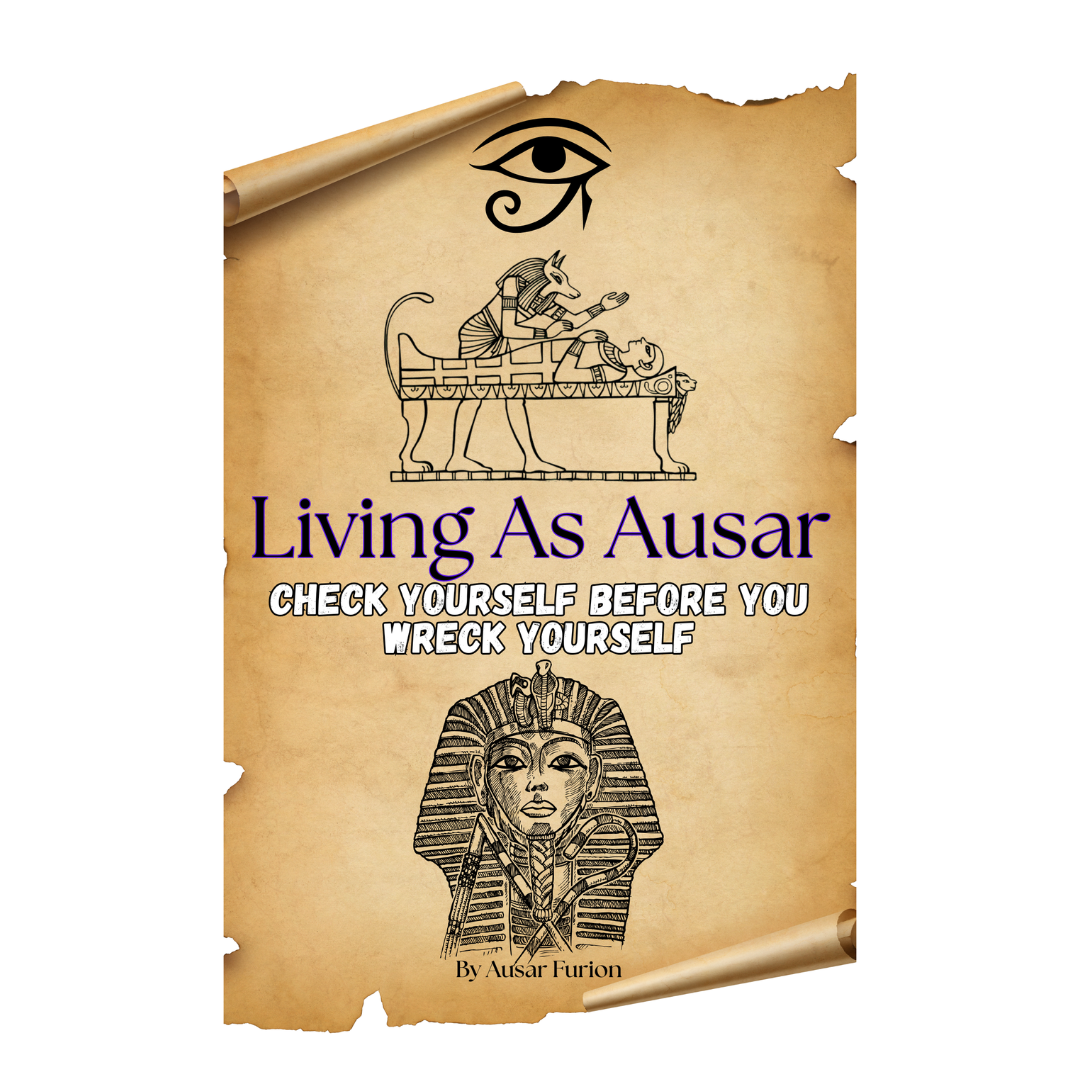
Living As Ausar: Check Yourself Before You Wreck Yourself
The complete full-colour edition — every diagram as intended, printable, yours to keep, at half the price of the paperback.
You were built to govern yourself — not to be run by fear, fantasy or inherited disorder. This is the complete system for taking the throne back.
The foundation text beneath the entire Hous of Nu body of work. Not a book of belief, nor a collection of ancient symbolism for intellectual curiosity, but a complete, structured system for self-knowledge and inner governance — a synthesis of Kamitic cosmology, mythic archetype, psychology, neuroscience, systems theory, astrology and metaphysical law, translated for the modern mind.
Across seven parts it takes you from the cosmic order that precedes the human, through the psychology of division (the "Set" within), into the mechanics of awakening along the eleven spheres (0–10) of the Tree of Life — and finally into the daily discipline of living as a stabilised, sovereign self. It is both teaching and mirror: a framework for recognising where you are governed by habit, wound, fear, fantasy or inherited disorder, and a guide for returning to yourself with clarity, discipline and command. At its heart is Smai Tui, the disciplined union of opposites, and Shedy, the path of observation, self-correction and ethical alignment through Ma'at.
For the serious seeker who wants a system, not a sermon.
What's inside:
Part 1 — The Cosmic Order: Kamitic creation, the Paut Neteru, and the laws of reality before the human.
Part 2 — The Divided Human: the psychology of Set, the Ausar–Auset–Heru mythos, and the Ten Wrongs to overcome.
Part 3 — The Ausar Principle: a full walk through Spheres 0–10, the mechanics of awakening and resurrection.
Part 4 — The Ascent: the hero's quest, the three pillars, and the ladder of initiation.
Part 5 — The Discipline: meditation, ritual, physical observances, and the Four Sons of Heru.
Part 6 — Divination & Training Tools: the 22 Major Arcana as initiatory pathways, the 36 Decan offices, and the full Tarot–astrology correspondence system.
Part 7 — Living As Ausar: stabilised consciousness, identity change, and the quick-reference guide to the living spheres.
Plus: a full appendix, a multi-tradition glossary (Kamitic, Kabbalistic, Yoruba, Igbo, Vedic, Taoist and more), the 42 Laws of Ma'at, and a complete bibliography.
Full colour throughout — print it yourself, keep it forever. Half the price of the paperback.
Prefer Kindle or paperback? Get it on Amazon → (Living As Ausar: Check Yourself Before You Wreck Yourself: The Architecture of Self-Knowledge and Sovereignty eBook : Furion, Ausar: Amazon.co.uk: Books)
You were built to govern yourself — not to be run by fear, fantasy or inherited disorder. This is the complete system for taking the throne back: Kamitic cosmology, the psychology of the "Set" within, and the eleven spheres of awakening, mapped step by step. Full-colour edition, printable and yours to keep — half the paperback price.
Living As Ausar: Check Yourself Before You Wreck Yourself
The complete full-colour edition — every diagram as intended, printable, yours to keep, at half the price of the paperback.
You were built to govern yourself — not to be run by fear, fantasy or inherited disorder. This is the complete system for taking the throne back.
The foundation text beneath the entire Hous of Nu body of work. Not a book of belief, nor a collection of ancient symbolism for intellectual curiosity, but a complete, structured system for self-knowledge and inner governance — a synthesis of Kamitic cosmology, mythic archetype, psychology, neuroscience, systems theory, astrology and metaphysical law, translated for the modern mind.
Across seven parts it takes you from the cosmic order that precedes the human, through the psychology of division (the "Set" within), into the mechanics of awakening along the eleven spheres (0–10) of the Tree of Life — and finally into the daily discipline of living as a stabilised, sovereign self. It is both teaching and mirror: a framework for recognising where you are governed by habit, wound, fear, fantasy or inherited disorder, and a guide for returning to yourself with clarity, discipline and command. At its heart is Smai Tui, the disciplined union of opposites, and Shedy, the path of observation, self-correction and ethical alignment through Ma'at.
For the serious seeker who wants a system, not a sermon.
What's inside:
Part 1 — The Cosmic Order: Kamitic creation, the Paut Neteru, and the laws of reality before the human.
Part 2 — The Divided Human: the psychology of Set, the Ausar–Auset–Heru mythos, and the Ten Wrongs to overcome.
Part 3 — The Ausar Principle: a full walk through Spheres 0–10, the mechanics of awakening and resurrection.
Part 4 — The Ascent: the hero's quest, the three pillars, and the ladder of initiation.
Part 5 — The Discipline: meditation, ritual, physical observances, and the Four Sons of Heru.
Part 6 — Divination & Training Tools: the 22 Major Arcana as initiatory pathways, the 36 Decan offices, and the full Tarot–astrology correspondence system.
Part 7 — Living As Ausar: stabilised consciousness, identity change, and the quick-reference guide to the living spheres.
Plus: a full appendix, a multi-tradition glossary (Kamitic, Kabbalistic, Yoruba, Igbo, Vedic, Taoist and more), the 42 Laws of Ma'at, and a complete bibliography.
Full colour throughout — print it yourself, keep it forever. Half the price of the paperback.
Prefer Kindle or paperback? Get it on Amazon → (Living As Ausar: Check Yourself Before You Wreck Yourself: The Architecture of Self-Knowledge and Sovereignty eBook : Furion, Ausar: Amazon.co.uk: Books)